
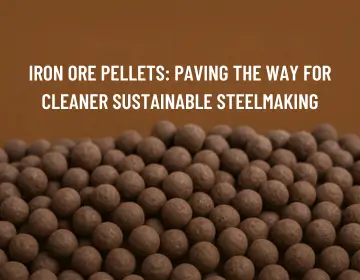
Iron Ore Pellets: Paving the Way for Cleaner, Sustainable Steelmaking
The global steel industry is undergoing a rapid transformation. With rising environmental regulations, increasing energy costs, and growing demand for low-carbon steel, manufacturers are seeking cleaner and more efficient raw materials. At the center of this shift lies iron ore pellets — a refined alternative to traditional sinter and lump ore.
For UAE steel producers, fabricators, and industrial buyers, iron ore pellets offer a pathway to consistent quality, reduced emissions, and improved furnace performance. This article explores why iron ore pellets matter, how they’re used, and why they are becoming a preferred choice across modern steelmaking operations.
What Are Iron Ore Pellets? A Technical Overview
Iron ore pellets are spherical, refined iron-bearing feedstock produced through a multi-stage process designed to enhance purity, efficiency, and environmental performance during steelmaking.
How Iron Ore Pellets Are Produced
The pelletization process typically includes:
1. Beneficiation
Raw iron ore is crushed, screened, and processed to:
- remove impurities
- increase iron concentration
- ensure consistent particle size
2. Mixing & Agglomeration
The ore fines are mixed with binders (often bentonite), water, and sometimes fluxes, then rolled into uniform-sized balls.
3. Induration (Heat Hardening)
Pellets are heated in furnaces up to ~1300°C, achieving:
- high strength
- improved durability
- enhanced thermal resistance
4. Screening & Grading
Finished pellets are sorted by size to meet technical specifications for blast furnace (BF) or direct reduced iron (DRI) applications.
Types of Iron Ore Pellets
1. Blast Furnace (BF) Pellets
Designed for integrated steel plants using coke-based blast furnaces.
They offer:
- high compressive strength
- stable reduction behavior
- low fines generation
2. Direct Reduction (DRI) Pellets
Used in gas-based DRI plants, such as many in the GCC region.
Features include:
- higher Fe content
- lower gangue levels
- improved metallization efficiency
- optimized for Electric Arc Furnace (EAF) steelmaking
Given the GCC’s strong focus on energy-efficient DRI/EAF systems, DRI-grade pellets hold significant regional relevance.
Why Iron Ore Pellets Support Cleaner, Sustainable Steelmaking
Steelmaking contributes approximately 7–8% of global CO₂ emissions. Iron ore pellets contribute to sustainability in multiple ways:
1. Reduced Energy Consumption
Pellets offer high iron content and predictable size, enabling:
- faster reduction rates
- lower energy use
- improved furnace performance
2. Lower Emissions Compared to Sinter
Pellet production emits significantly fewer pollutants than sintering, which typically releases:
- SOx/NOx
- particulate matter
- carbon emissions
Pellets eliminate the high-emission sintering stage in many steel plants.
3. Higher Furnace Productivity
Thanks to their uniform shape and metallurgical properties, pellets:
- enhance airflow in furnaces
- support higher throughput
- improve yield
4. Increased Recycling & Circularity
Iron ore pellets reduce waste by:
- lowering fines generation
- improving metallic recovery
- supporting efficient EAF operations
As steelmakers globally move toward green steel, pellets become a cornerstone of cleaner, optimized production.
Industry Applications of Iron Ore Pellets
Iron ore pellets play a critical role in multiple industrial processes:
Direct Reduction Iron (DRI) & Hot Briquetted Iron (HBI)
Pellets are essential for:
- Gas-based DRI plants (widely used in UAE and GCC)
- HBI production for export markets
Blast Furnace Operations
BF pellets are used in:
- integrated steel complexes
- pig iron production
- high-volume steelmaking operations
Electric Arc Furnace (EAF) Steelmaking
Pellets support:
- clean charge mix
- improved metallization
- reduced impurities
Steel Products Manufacturing
Pellet-derived iron is used to produce:
- beams
- channels
- plates
- pipes
- fittings
- construction steel
This directly connects iron ore pellets with Noble FZE’s steel product segments.
Procurement Insights for UAE Buyers
Choosing the right supplier and pellet grade is crucial for operational efficiency.
1. Select the Right Pellet Grade
UAE buyers typically require:
- DRI-grade pellets (higher Fe, low silica/alumina)
- BF-grade pellets for integrated mills
Always verify:
- Fe content
- gangue composition
- chemical uniformity
- reduction index
- cold crushing strength
2. Request Technical Documents
Always ask for:
- MTCs / Mill Test Certificates
- Quality certifications
- Origin documentation
- SGS / third-party inspections
3. Logistics & Bulk Supply
Pellets are typically supplied:
- in bulk shipments
- in 20–40 ft containers
- via regional warehousing partners
Ensure suppliers offer:
- consistent stock levels
- multi-port delivery options
- fast clearance and documentation
4. Consider Integrated Procurement
UAE steel manufacturers and contractors benefit by combining pellet procurement with other items such as:
- valves
- pipes & fittings
- construction steel
- industrial hardware
- MEP materials
- oil & gas supplies
This reduces freight cost and vendor management effort.
Advantages of Using Iron Ore Pellets
1. Higher Iron Content
Typical Fe content of pellets ranges from 64% to 69%, ensuring maximum furnace efficiency.
2. Uniform Size & Quality
Their consistent shape ensures:
better permeability
stable reduction behavior
efficient gas flow
3. Lower Impurities
Reduced silica, alumina, and sulfur improve:
slag chemistry
power consumption
productivity
4. Enhanced Environmental Performance
Pellets significantly reduce the environmental footprint vs. lump ore and sinter.
5. Reduced Melting Time
A uniform charge material improves EAF and DRI melting performance.
UAE Market Relevance
The UAE steel industry is rapidly growing due to:
- construction mega-projects
- industrial expansion
- oil & gas investments
- manufacturing growth
- increased demand for green steel
Many UAE steel plants — especially DRI/EAF facilities — rely heavily on DR-grade iron ore pellets due to:
- higher efficiency
- lower emissions
- compatibility with gas-based iron reduction
With the UAE’s vision for sustainable industrial development, iron ore pellets are becoming increasingly important for meeting energy and environmental standards.
Why Choose Noble FZE for Iron Ore Pellets & Steel Raw Materials
Noble FZE is a trusted UAE-based trading company with strong sourcing networks across Asia, Europe, Africa, and the Middle East. With a diversified portfolio across steel products, industrial hardware, valves, pipes, fittings, MEP materials, construction supplies, and oil & gas equipment, Noble FZE provides end-to-end procurement support for complex industrial requirements.
What Makes Noble FZE a Reliable Partner
- Global, Verified Suppliers with proven pellet quality
- Consistent Supply of DRI and BF-grade pellets
- Technical Expertise in steel and industrial materials
- Comprehensive MTCs and compliance documentation
- Bulk & Containerized Shipping Options
- Cross-category Procurement to streamline sourcing
- Efficient UAE Logistics for fast delivery
Whether you’re supplying a mega steel plant, a fabrication facility, an EPC contractor, or an industrial manufacturer, Noble FZE ensures reliable, cost-effective, and timely material procurement.
FAQs
Q1: Are iron ore pellets better than lump ore?
Ans: Yes. Pellets offer higher iron content, uniformity, and efficiency, making them more suitable for modern DRI, BF, and EAF processes.
Q2: Do UAE steel plants primarily use DRI pellets?
Ans: Most UAE steelmakers rely heavily on gas-based DRI plants, making DR-grade pellets highly preferred.
Q3: What documents are required for pellet procurement?
Ans: Typically MTCs, origin certificates, inspection reports, and quality certifications.
Q4: Can Noble FZE supply pellets in bulk?
Ans: Yes. Noble FZE provides bulk shipments, containerized loads, and mixed-material procurement solutions.
Q5: Are iron ore pellets considered environmentally friendly?
Ans: Yes — they reduce emissions, improve furnace efficiency, and eliminate the need for high-emission sintering processes.
Conclusion
Iron ore pellets are reshaping the future of steelmaking through cleaner operations, enhanced furnace performance, and reduced environmental impact. As global steel manufacturers — including those in the UAE — push for higher efficiency and sustainability, pellets provide a strategic, cost-effective, and environmentally responsible solution.
With rising regional demand and increasingly strict environmental standards, now is the right time for UAE buyers and manufacturers to adopt pellet-based steelmaking.
Noble FZE supports this transition by offering reliable, high-quality iron ore pellets along with a comprehensive portfolio of industrial hardware, MEP supplies, steel products, valves, pipes, fittings, and oil & gas equipment.